
Amazon Web Services
CompanyA company discussed on Latent Space.
2 episodes
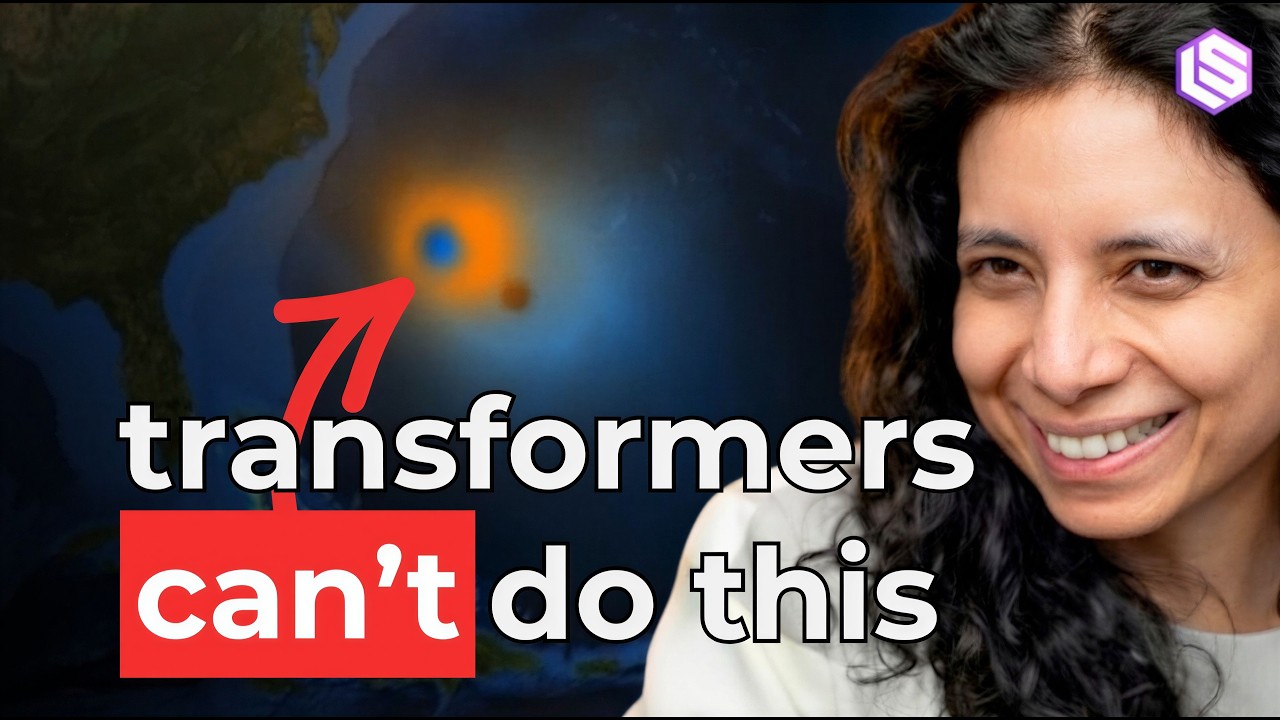
🔬 Why Transformers Hit a Wall the Moment Physics Shows Up — Anima Anandkumar, Caltech
Aug 26, 2026 · 1:23:32
Anima Anandkumar, Caltech professor and ex-NVIDIA lead, argues physical-world modeling needs neural operators that bake in physics, not language-style scaling; it already rivals supercomputers. Physics-informed nets fail; Fourier neural operators capture multi-scale non-local phenomena, and FourCastNet, trained on 50,000 reanalysis samples, forecasts weather tens of thousands of times faster on a consumer GPU. FourCastNet 3’s spherical harmonics keep month-long rollouts stable for ensemble climate prediction; the same operators build a fusion digital twin a million times faster than simulation and inverse design. TorchLean ports PyTorch to Lean for formal robustness proofs, and on the UN Science Advisory Board she urges AI for science not be regulated like chatbots. Bottleneck: more compute.

The AI Architect: Bret Taylor
Feb 11, 2025 · 1:35:59
Bret Taylor, CEO of Sierra and chairman of OpenAI, recounts engineering AI's future across three eras — rewriting Google Maps' frontend in a weekend (cutting un-gzipped code to 20K), building Sierra's in-house agent platform for consumer brands like Sonos and SiriusXM, and navigating OpenAI's leadership crisis. He argues that AI agents' core abstractions are still pre-React, compares today's agents to jQuery, and predicts that outcome-based pricing will dominate as agents complete jobs rather than assist humans. He urges software engineers to move up the stack toward domain-specific agents and to embrace Rust-like languages for AI-generated code, emphasizing formal verification and safety. Taylor also shares how OpenAI prioritizes mission over product features, and why the relationship with Microsoft remains OpenAI's most important partnership.
Powered by PodHood